The Logic of High-Yield Savings: Optimizing Cash Flow in 2026
When interest rates are high, leaving your cash sitting in a standard transaction account earning 0.01% isn’t just inefficient—it’s a leaky bucket draining your purchasing power.
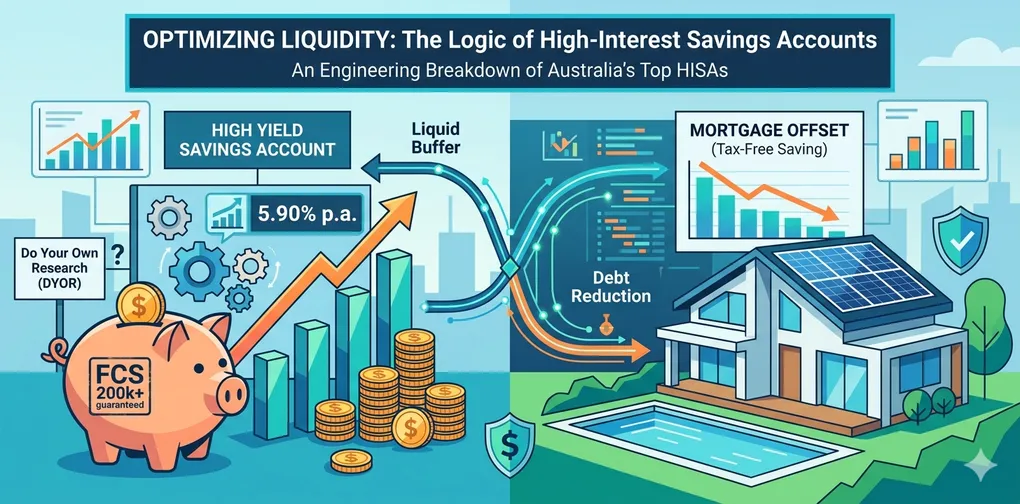
While an offset account is usually the ultimate mathematical play to reduce home loan interest, having a separate, high-yield savings account(HISA) is an excellent alternative strategy. It generates reliable liquid cash flow that you can access instantly if you suddenly face a major expense or, worse, lose your job. It keeps your emergency fund separate and active.
“Optimizing your savings isn’t about getting rich; it’s about building a highly liquid buffer that pays you to keep it ready.”
📊 Comparing the Top 5 Savings Accounts
To see how the market stacks up, here is a breakdown of the top 5 savings accounts based on a $10,000 balance held for one year.
Note: Calculations account for introductory rate expiry periods where applicable over a 12-month timeline.
| Bank / Provider | Account Name | Max Rate | Key Criteria | Est. Return ($10k/1yr) |
|---|---|---|---|---|
| Rabobank | High Interest Savings Account | 5.90% p.a. | Introductory rate for the first 4 months (up to $250k). Drops to base rate after. | $536 |
| UBank | Save Account | 5.85% p.a. | Intro rate for 4 months, then 5.10% ongoing p.a. Deposit min. $1/month to grow balance. | $535 |
| Westpac | Life Account (18-34 years) | 5.75% p.a. | Grow balance and make 20+ settled purchases via linked account each month. | $575 |
| ING | Savings Maximiser | 5.50% p.a. | Deposit min. $1,000, make 5+ card purchases, and grow balance monthly (up to $100k). | $550 |
| CommBank | GoalSaver | 5.00% p.a. | Grow your balance by $200+ (excluding interest) with no withdrawals. | $500 |
*Estimates are indicative gross returns before tax. Actual values vary based on compounding frequency, compounding base rates post-introductory period, and fulfillment of monthly criteria.
⚠️ Important Note: The financial landscape moves fast, and the interest rates listed above might not be completely accurate or up to date. Rates are subject to change at any time depending on the macroeconomic environment and central bank decisions. Sometimes one bank will offer the highest rate on the market, and a few months later, another provider will take the lead. Always do your own research (DYOR) before opening an account.
🔒 The Trust Factor: Is Your Money Safe?
When optimizing for yield, it’s easy to just chase the highest number on the screen. However, as an engineer evaluates infrastructure stability, you also need to factor in your level of trust towards the institution.
You want your hard-earned capital to be completely secure. When looking at providers, keep these two tiers in mind:
- The Financial Claims Scheme (FCS): Ensure the provider is an Authorized Deposit-taking Institution (ADI). The Australian Government guarantees deposits up to $250,000 per person, per ADI. This covers all major players and digital subsidiaries (like Ubank, which is backed by NAB).
- Brand Trust vs. Yield: Some people feel entirely comfortable using smaller, digital-only banks to harvest an extra 0.50% yield. Others prefer the operational peace of mind that comes with keeping their money inside one of the Big Four, even if it means sacrificing a tiny bit of optimization. Choose the environment that matches your risk tolerance.
🚨 The Catch: The “Tax Drag” on Your Interest
Before you allocate all your capital here, you need to account for another major variable in this system: Tax.
In Australia, any interest you earn from a savings account is counted as assessable income. This means it gets stacked on top of your salary and taxed at your marginal tax rate.
If you are earning a strong professional salary (e.g., in the 37% or 45% tax bracket), a $550 interest payout could see nearly half of it clawed back by the ATO:
- Gross Interest Earned: $550
- Tax Deducted (at 37% bracket): $203.50
- Net Cash Kept: $346.50
This is exactly why an offset account is so powerful for homeowners—every dollar saved on mortgage interest is effectively “tax-free” because it reduces a debt rather than creating income. Don’t even mention when mortgage rate is higher than saving interest rate. However, if you need pure, unencumbered liquidity outside your home loan structure, the high-interest account remains your best tool.
🏦 How to Choose Your Account
When looking at the criteria above, pick the account that matches your existing behavior:
- If you don’t mind switching account frequently: Look at intro rates like Rabobank, but remember that they often drop back to a much lower ongoing rate after 4 months.
- If you automate your life: Ubank requires a simple $1 deposit to trigger their ongoing rate.
- If it’s your daily spend card or you don’t mind 5+/20+ card transactions on your accounts: ING or Westpac offer elite rates but require active card transactions to unlock the bonus yield. Not a promotion but ING is my choice.
💎 Another strategy of using high-interest saving accounts - Dump and forget
- Large lump sums: Use this for bonuses, inheritances, or tax refunds. Puts money to work immediately without temptation to spend it until you find a better use for it.
- Maximize intro rates: Choose an account with a high introductory rate and set a reminder before it expires. Then decide whether to switch or stay based on your goals.
- Emergency fund building: Set aside a specific amount in a high-yield account and let it grow. Keep it easily accessible while tracking account terms and rate expiry dates.
- Windfall/lottery winnings: Don’t spend immediately. Let yourself calm down, then deposit into a HISA to earn interest while you plan. Avoids impulsive decisions and gives you time to think.
🧩 Final Thought
Don’t let analysis paralysis stop you from moving money out of a zero-interest account. Choose a system that fits your automated workflow, factor in the trust and tax variables, and keep that cash “active” and brings you more money. Let the money work for you while you focus on building other assets. 🚀